Product Knowledge
Production Process of River Pebbles Vertical Impact Crusher
author:dahua2 time:2025-12-10
River pebbles, as a high-quality natural building material, are widely used in construction, highways, railways, and other fields due to their high hardness, strong wear resistance, and stable chemical properties. To process river pebbles into sand and gravel aggregates that meet requirements, a vertical shaft impact crusher (also known as a sand making machine) is a key piece of equipment. This article will detail the production process of processing river pebbles using a vertical shaft impact crusher, including equipment selection, process flow, key operating points, and solutions to common problems, helping readers to fully understand this production process.
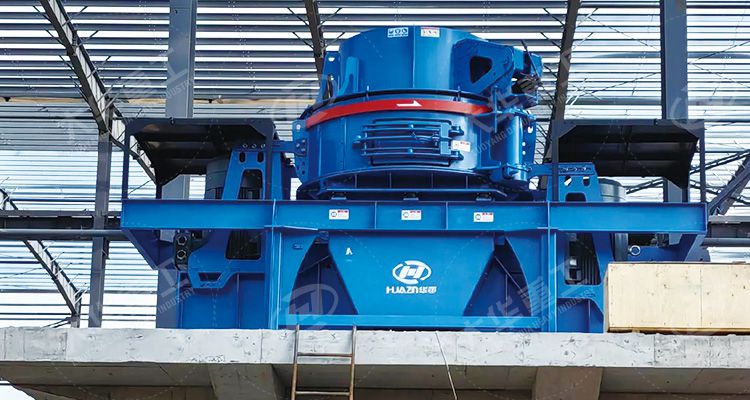
I. Working Principle and Advantages of a Vertical Shaft Impact Crusher
Vertical shaft impact crusher is a device that uses a high-speed rotating rotor to throw materials against the surrounding wall for impact crushing. Its core component is the rotor, which is equipped with wear-resistant hammers or throwing heads. After the material enters the crushing chamber, it collides with the wear-resistant lining plates or other materials on the surrounding wall under the drive of the high-speed rotating rotor, thereby achieving crushing. This crushing method is called "stone-on-stone" or "stone-on-iron," and it has advantages such as high crushing efficiency, good finished product particle shape, and low energy consumption.
Compared to traditional jaw crushers and cone crushers, vertical shaft impact crushers offer the following significant advantages when processing river pebbles:
1. Excellent finished product particle shape: Due to the impact crushing principle, the finished sand and gravel particles are mostly cubic with low needle-like and flaky content, making them more suitable as high-quality building aggregates.
2. High crushing ratio: A single unit can achieve a high crushing ratio, simplifying the process flow.
3. Energy saving and environmental protection: Low energy consumption, and dust pollution can be reduced through a closed design.
4. High degree of automation: Modern vertical shaft impact crushers are mostly equipped with intelligent control systems, facilitating the adjustment of output particle size.
II. Process Flow of River Pebble Sand Making
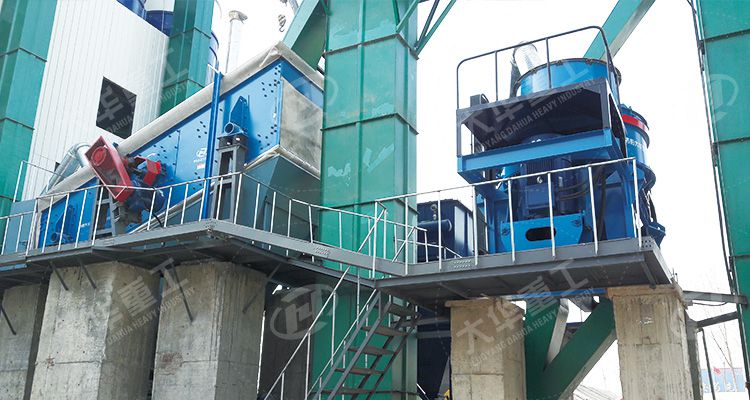
A complete river pebble sand making production line typically includes feeding, crushing, screening, and washing stages. The vertical shaft impact crusher, as the core equipment, directly affects the final product quality and production efficiency through the rational configuration of its preceding and following processes. The following is a typical production process flow:
1. Raw Material Pretreatment
River pebbles, after mining, typically contain impurities such as mud and weeds. They need to be pre-screened using a vibrating feeder to remove these impurities. For larger raw materials (e.g., exceeding 50mm), a jaw crusher can be used for coarse crushing to reduce the material to a size suitable for feeding into a vertical shaft impact crusher (generally controlled below 30-40mm).
2. Vertical Shaft Impact Crushing
The pre-treated river pebbles are conveyed into the vertical shaft impact crusher via a belt conveyor. The material gains kinetic energy under the action of the high-speed rotating rotor and collides with the wear-resistant liners or other materials on the surrounding wall, achieving crushing. The crushed material is discharged from the outlet and enters the next stage.
3. Screening and Grading
The crushed material is screened by a vibrating screen. Finished sand that meets the particle size requirements enters the finished product bin, while oversized material is returned to the vertical shaft impact crusher for secondary crushing (closed-loop circulation system). Multiple screens can be configured as needed to achieve multi-stage grading.
4. Washing and Removing Impurities (Optional)
For high-quality sand and gravel, a wheel sand washer or spiral sand washer can be added to remove stone powder and trace impurities, improving the purity of the finished product. This step is more common in areas with abundant water resources.
5. Finished Product Storage
The final qualified manufactured sand is transported to the finished product stockpile or storage silo via belt conveyor, completing the entire production process.
III. Key Process Parameters and Control Points
To ensure the quality and efficiency of river pebble sand making, the following process parameters need to be focused on:
1. Feed Size Control: Vertical shaft impact crushers are quite sensitive to feed size, generally requiring it not to exceed 40mm. Excessive feed will increase the equipment load, reduce crushing efficiency, and even damage the rotor.
2. Rotor Speed Adjustment: Rotor speed directly affects the crushing effect and finished product particle size. Higher speed results in greater crushing force and finer finished product particle size, but energy consumption and equipment wear will also increase accordingly. It needs to be adjusted reasonably according to product requirements.
3. Discharge Port Adjustment: The particle size distribution of the finished sand can be controlled by adjusting the gap between the discharge grate bars or the distance between the impact plates. Modern equipment often uses hydraulic adjustment systems, making operation more convenient.
4. Wear-Resistant Parts Maintenance: Wear of wear-resistant parts such as hammers, throwing heads, and liners significantly affects crushing efficiency. Regular checks of wear are necessary, and timely replacement or rearrangement of the working face is required.
5. Lubrication System Maintenance: The main bearing is the core component of the equipment and must be well lubricated. The quality and level of the lubricating oil should be checked regularly, and timely replenishment or replacement is necessary.
IV. Common Problems and Solutions
In actual production, the following problems may be encountered:
1. Poor Finished Product Particle Shape: This manifests as an excessive number of needle-like and flaky particles. Possible causes include excessively large feed particle size or uneven rotor wear. Solutions include strictly controlling the feed particle size, regularly rotating or replacing the hammers, and adjusting the rotor speed.
2. Decreased Output: This may be caused by wear of wear-resistant parts, uneven feeding, or improper equipment parameters. 3. Abnormal equipment vibration: This is usually related to rotor imbalance or bearing damage. The machine needs to be stopped and the rotor assembly inspected; dynamic balancing should be performed if necessary. The condition of the bearings should be checked, and damaged parts replaced promptly.
4. Dust pollution: This can be controlled by enclosing the conveying system, installing dust removal equipment, or adopting wet production (adding water spray).
V. Process Optimization and Development Trends
With technological advancements, the river pebble sand making process is constantly being optimized:
1. Intelligent control: Modern production lines increasingly use PLC control systems to achieve equipment linkage, automatic parameter adjustment, and fault warnings, significantly improving production stability and efficiency.
2. Energy-saving design: New vertical impact crushers reduce energy consumption by optimizing rotor structure and airflow field; some advanced models can achieve energy savings of over 20%.
3. Environmental upgrade: Dry production processes combined with high-efficiency dust removal systems, or the use of circulating water sand washing technology, achieve zero wastewater discharge, meeting increasingly stringent environmental requirements. 4. Multifunctionality: Some new equipment can integrate crushing and shaping, simplifying the process and improving product quality.
The production process of processing river pebbles using a vertical shaft impact crusher is a systematic project, requiring reasonable equipment configuration, optimized process parameters, and strengthened production management. With advancements in equipment technology, this process is developing towards high efficiency, energy saving, environmental protection, and intelligence. For production enterprises, mastering core process points and timely updating technology and equipment are crucial to maintaining a competitive edge in the fierce market and producing manufactured sand products that meet the demands of high-quality construction. In the future, with the deepening of green mining construction, the efficient and environmentally friendly utilization of river pebble resources will usher in even broader development prospects.
Previous Article:No Information
Next Article: Key Points for Selecting Bluestone Crushing Equipment