Product Knowledge
Rod Mill VS Ball Mill: Which is Best for Your Project?
author:dahua2 time:2026-11-24
Both ball mills and rod mills are primary pieces of equipment used in the ore-grinding process. As both feature a horizontal rotating cylindrical design, they can look quite similar—often making it difficult for newcomers to the industry to distinguish between them. Choosing the wrong type can negatively impact the production capacity and particle size specifications of an entire processing line. Drawing on decades of experience in mill R&D, on-site commissioning, and production line integration, Luoyang Dahua Heavy Industry has clarified the core differences and practical selection criteria for these two types of equipment, helping clients in the mining, aggregate, and construction materials sectors make quick, informed decisions.
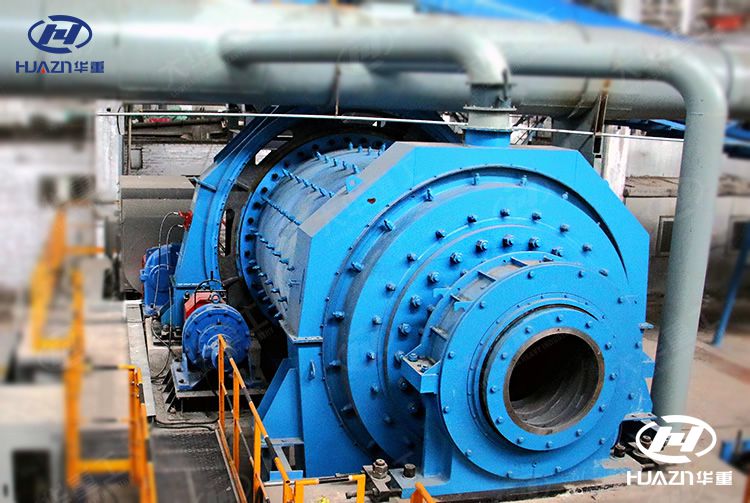
I. Core Differences
1. Grinding Media
Rod mills are loaded with tempered, wear-resistant steel rods (typically 50–100 mm in diameter). During operation, these rods make line contact with one another, and material is selectively crushed and ground within the gaps between the rods. In contrast, ball mills are loaded with wear-resistant steel balls of various sizes. These media make point contact with each other, achieving size reduction primarily through the impact force generated as the balls are lifted and dropped. This is the most fundamental difference between the two.
2. Structural Proportions
The length-to-diameter ratio of a rod mill’s cylinder is typically kept between 1.5 and 2.0; this prevents the steel rods from bending or becoming tangled and jammed during operation. For ball mills, the length-to-diameter ratio is generally around 1.0 (though it may be slightly higher for certain specialized models). This difference in overall proportions allows for an easy visual distinction between the two.
3. Discharge Characteristics
Rod mills produce a stable output with a particle size range of 0.147–0.833 mm. The particle size distribution is concentrated and uniform, with significantly less "over-grinding" (the production of excessively fine particles). Ball mills can achieve a finer output, ranging from 0.074 to 0.4 mm. They offer superior fine-grinding capabilities, resulting in a finer final product—making them better suited for applications requiring intensive, deep-level grinding. 4. Differences in Discharge Methods
Rod mills typically employ an overflow or open-type discharge structure. They do not use grate plates, and the hollow trunnion at the discharge end has a larger diameter than that of a ball mill of the same specification; this ensures that coarse material can be discharged smoothly without causing blockages. Ball mills, by contrast, generally feature either a grate-type or overflow-type discharge structure. Grate-type ball mills are equipped with a forced-discharge grate plate, which enables faster discharge and higher overall processing efficiency.
II. Selection Criteria
Choosing a Rod Mill: Ideal for the primary grinding (coarse grinding) stage in gravity separation processes—particularly for rare metal ores prone to "sliming" (excessive fine-particle generation), such as tungsten-tin or tantalum-niobium ores. They are also widely used in the production of high-quality manufactured sand and quartz sand. By preventing over-grinding, they help avoid the loss of valuable minerals. In a primary grinding circuit, they are highly efficient at reducing 20–6 mm feed material down to 3–1 mm.
Choosing a Ball Mill: Suitable for fine-grinding applications across various industries, including cement production, metal ore beneficiation, refractory materials, and the glass and ceramics sectors. They can be used for both dry and wet grinding, easily achieving the fine-particle requirements (a high percentage of material passing through a 200-mesh screen) necessary for processes like flotation and leaching.
Luoyang Dahua Heavy Industry is a direct-sales manufacturer integrating R&D, production, sales, and service. We offer a wide range of high-quality, reliable mining and crushing equipment. We provide customized equipment configurations and operational solutions tailored to your specific process requirements. Our comprehensive services cover everything from equipment selection and site assessment to manufacturing, installation, commissioning, and final handover. We invite you to visit Luoyang Dahua Heavy Industry for an on-site inspection—we are ready to provide you with professional support!
Previous Article:No Information
Next Article: How Much Does a 500-ton-per-hour Sand Making Production Line Cost?