Product Knowledge
What is the Difference Between a Modular Crushing Station and a Mobile Crushing Station?
author:dahua2 time:2026-11-17
In operations such as open-pit mining, construction waste recycling, and temporary aggregate processing, both modular crushing stations and mobile crushing stations serve as flexible, non-fixed crushing solutions. The primary distinction lies in their mobility: modular crushing stations require disassembly and transport to relocate, whereas mobile crushing stations feature an integrated chassis that allows for autonomous movement. During the project planning phase, users often struggle to distinguish the specific operational scope of these two types of equipment, which can negatively impact overall operational efficiency and total cost.
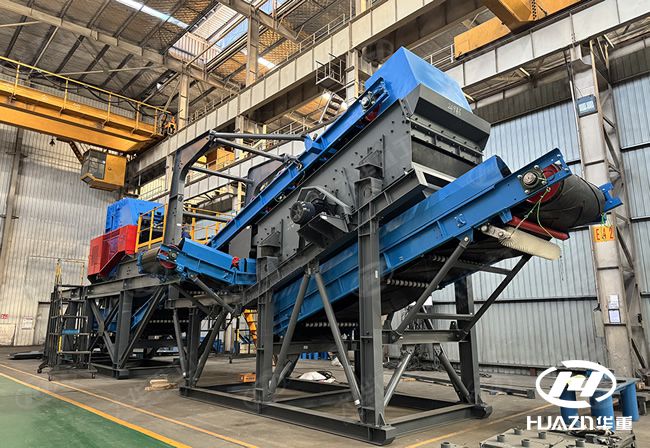
1. Mobility and Relocation Characteristics
Modular Crushing Stations: These lack an integrated propulsion system and must be transported—either in sections or as a complete unit—using flatbed trailers or tracked carriers. A single relocation typically takes no more than 48 hours; however, frequent relocation is generally not recommended.
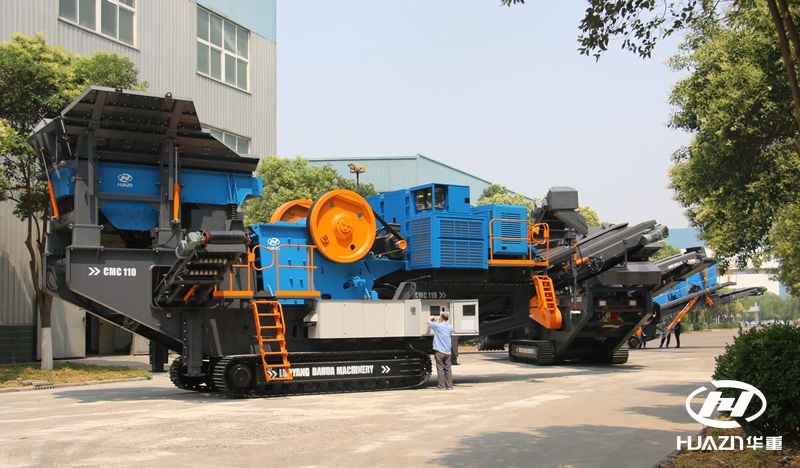
Mobile Crushing Stations: Equipped with a self-propelled chassis (tracked or wheeled), these units can move autonomously alongside the advancing excavation face. They require no additional lifting equipment, and short-distance relocations can be executed almost instantly.
2. Infrastructure and Deployment Efficiency
Modular Crushing Stations: Built on a skid-mounted, all-steel support structure, these units eliminate the need for extensive concrete foundations. They are pre-assembled at the factory, transported to the site, and quickly bolted together—enabling production to begin within 7–10 days. They are ideal for challenging environments, such as high-altitude locations or sites with limited space.
Mobile Crushing Stations: These units arrive from the factory with integrated feeding, crushing, and conveying systems. Upon arrival, they require no complex installation; once connected to a power source, they are ready for immediate operation, completely bypassing the need for foundation construction.
3. Typical Deployment Locations
Modular Crushing Stations: Typically positioned on the working benches of an open-pit mine, keeping the transport distance for mined material within 3 km. They are relocated periodically as the mining benches advance.
Mobile Crushing Stations: Positioned directly at the excavation face, these units can operate deep within the mining pit, following the progress of the extraction work and eliminating the need for long-distance material transport. 4. Investment and Residual Value
Modular Crushing Stations: Civil engineering costs are minimal, with over 90% of the total investment allocated to equipment and steel structures. These steel structures retain significant residual value even after years of service and can be disassembled for reuse at other locations.
Mobile Crushing Stations: These units feature a high degree of integration, resulting in a higher initial procurement cost. Maintenance costs for the power and mobility systems are substantial, making them less economically efficient than modular solutions for long-term, fixed-site operations.
5. Suitable Applications
Modular Crushing Stations: Ideal for advancing open-pit mines, infrastructure aggregate projects in high-altitude regions, and temporary sand and gravel production lines with tight schedules.
Mobile Crushing Stations: Well-suited for on-site processing of urban construction waste, small-scale or scattered quarries, and mobile operations along road construction projects.
As a professional brand deeply rooted in the crushing and screening equipment sector, Dahua Heavy Industry offers modular crushing stations that can be flexibly configured to meet diverse requirements—such as hard rock crushing, coal gangue processing, or aggregate production—by integrating primary equipment like jaw crushers, cone crushers, impact crushers, and vertical shaft impact crushers. The entire system utilizes a bolted design, virtually eliminating the need for on-site welding. Additionally, the company’s CMC series of tracked mobile stations features an intelligent control system that monitors material feed rates and crushing chamber pressure in real time, automatically adjusting operating parameters. Together, these two product lines address a wide range of operational scenarios, providing clients with comprehensive crushing solutions that span everything from short-term emergency operations to stable, long-term production.
Previous Article:No Information
Next Article: Process Flow of Metal ore Crushing Plant